
Respiratory
Respiratory diseases affect the lungs and airways, leading to difficulty breathing and reduced oxygen exchange. They can be acute (short-term, like flu or respiratory distress syndrome) or chronic (long-term, such as asthma or COPD).
These conditions are a major global health burden, responsible for millions of deaths each year, mainly due to smoking, pollution, infections, and aging populations.
Chronic Obstructive Pulmonary Disease (COPD)
Chronic Obstructive Pulmonary Disease (COPD)
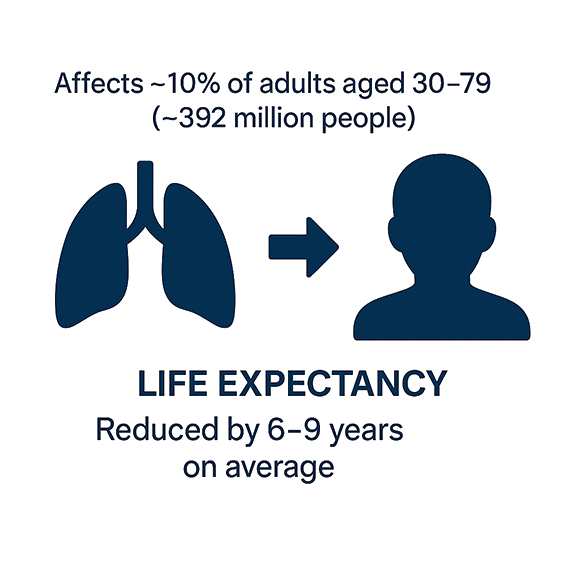
Chronic obstructive pulmonary disease (COPD) affects around 10% of adults aged 30 to 79 worldwide, corresponding to approximately 392 million people.
It is a progressive condition characterized by persistent airflow limitation and breathing difficulties resulting from chronic inflammation of the airways.
Beyond its respiratory impact, COPD significantly reduces overall life expectancy—by an average of 6 to 9 years—and poses a major global health challenge due to its high prevalence, chronic progression, and substantial burden on patients’ quality of life.
The study demonstrates that inhaled myo-inositol administration is associated with a significant increase in oxygen saturation (SpO₂) and an improvement in respiratory symptoms, highlighting its potential role in supporting respiratory physiology and symptom management in patients with airway diseases.
Asthma
Asthma
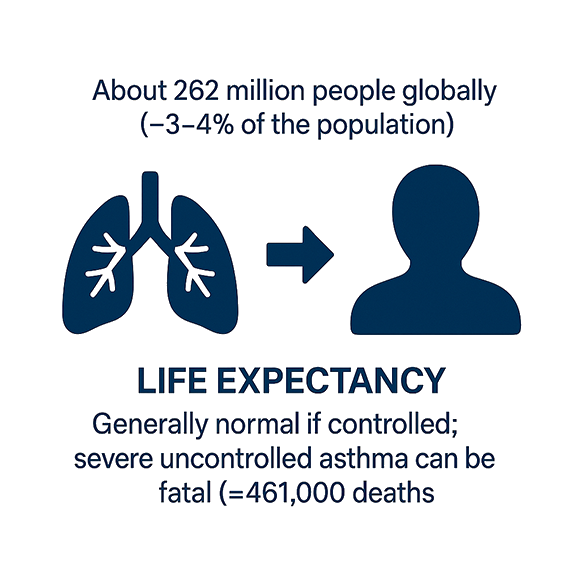
Asthma affects approximately 262 million people worldwide, representing around 3–4% of the global population.
It is a chronic inflammatory disease marked by airway hyperreactivity, which causes symptoms such as wheezing, coughing, and shortness of breath.
When properly managed, individuals with asthma can maintain a normal life expectancy, but severe or uncontrolled cases can be life-threatening, contributing to an estimated 461,000 deaths each year.
The “Asthma-Polycystic Ovary Overlap Syndrome” and the Therapeutic Role of Myo-Inositol
Int J Mol Sci. 2023; 24:6959.
Considering asthma as a chronic inflammatory disease with complex immunological and metabolic interactions, the following review explores the emerging link between asthma and polycystic ovary syndrome (PCOS), introducing the concept of the “asthma–PCOS overlap syndrome.”
The study highlights the therapeutic role of myo-inositol as a naturally occurring compound with a favorable safety profile, suggesting its potential contribution to the management of asthma through modulation of inflammatory pathways and metabolic balance, particularly in patients presenting with overlapping asthma and PCOS characteristics.
Respiratory Distress Syndrome (ARDS)
Respiratory Distress Syndrome
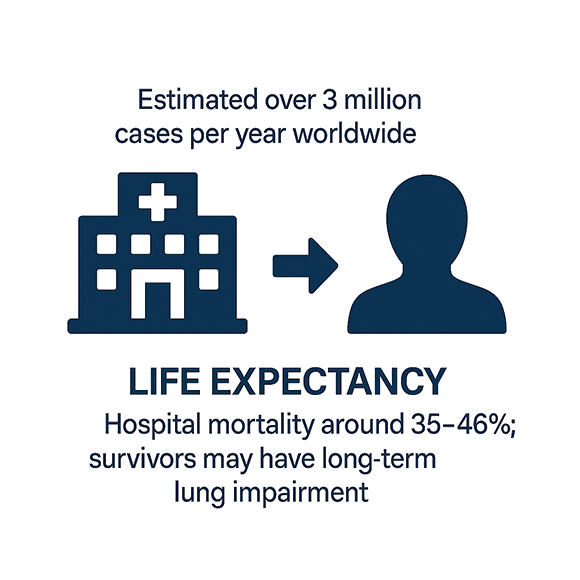
Acute respiratory distress syndrome (ARDS) affects an estimated over 3 million people worldwide each year.
It is a serious condition often triggered by infection, inflammation, or severe injury, leading to impaired oxygen exchange and respiratory failure.
Despite advances in critical care, hospital mortality remains high—around 35–46%, and many survivors experience long-term lung damage and reduced respiratory function, making ARDS a major cause of morbidity and mortality globally.
The study demonstrates that inositol supplementation in premature infants is associated with improved surfactant synthesis and lung maturation, contributing to better respiratory outcomes and supporting the physiological development of the respiratory system in neonates with RDS.
Bronchiectasis
Bronchiectasis
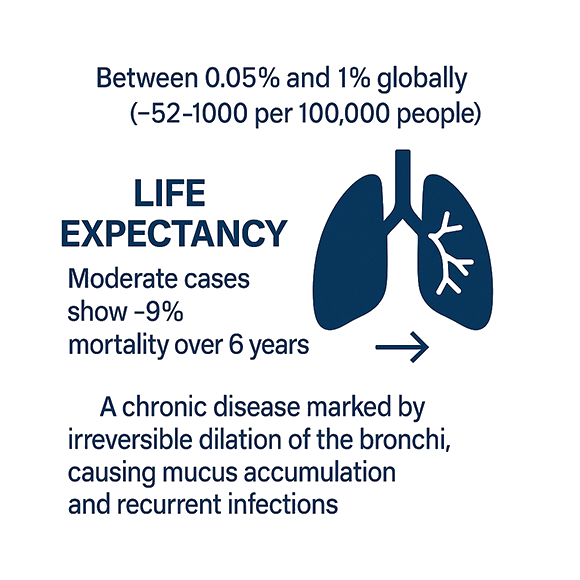
Considering the chronic nature of bronchiectasis and its significant impact on mucus clearance, recurrent infections, and respiratory function, the following retrospective study evaluates the role of nebulized myo-inositol as a supportive, non-pharmacological approach in affected patients. The results show that inhaled myo-inositol administration is associated with improved mucus clearance and enhanced respiratory function, supporting its potential role in facilitating airway hygiene and contributing to symptom management in patients with bronchiectasis.
Flu
Flu
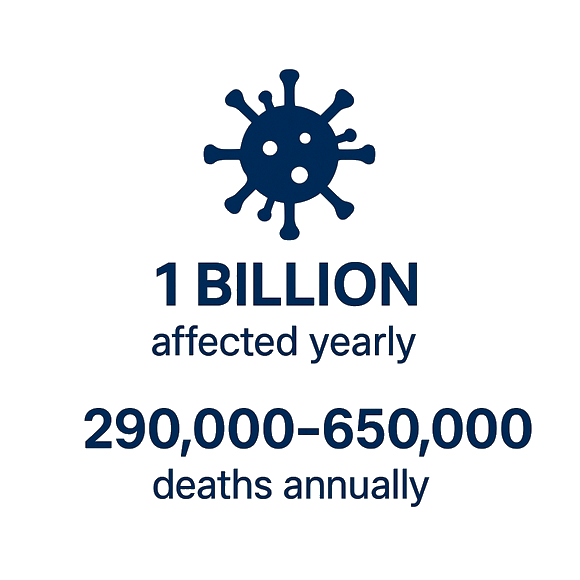
Influenza affects an estimated 1 billion people worldwide each year, with 3 to 5 million cases classified as severe.
It is a viral infection of the respiratory tract that causes inflammation, coughing, and breathing difficulties, particularly in fragile or high-risk individuals such as the elderly or those with chronic illnesses.
While most people fully recover, influenza can be fatal in vulnerable populations, accounting for approximately 290,000 to 650,000 deaths annually across the globe.